The Real Truth: Delonghi Rivelia or Ninja Frostvault Cooler?
Introduction
Comparing the De’Longhi Rivelia and the Ninja Frostvault Cooler can feel like a category mistake—because it is. One is a modern bean-to-cup espresso system aimed at daily coffee ritual, consistency, and convenience. The other is a high-performance cooler built for travel, outdoor days, job sites, tailgates, and long hauls where temperature retention and smart storage matter most. And yet, shoppers still end up weighing them against each other for one practical reason: both are premium “comfort and convenience” electronics-adjacent purchases that compete for the same discretionary budget.
The real truth is that there is no universal winner. The better buy depends on where friction exists in day-to-day life. If mornings are chaotic and café spending is climbing, the Rivelia can change habits and reduce recurring costs. If weekends and workdays regularly involve transporting food and drinks safely in heat, long distances, or unpredictable conditions, the Frostvault can prevent waste, protect quality, and reduce hassle.
This editorial breaks both products down in the way most buyers actually evaluate them: usability, performance in real-world scenarios, maintenance and reliability, footprint, and what ownership feels like after the first two weeks of novelty wear off.
Product Review & Analysis: De’Longhi Rivelia
What it is (and who it’s for)
The De’Longhi Rivelia is positioned as a modern, lifestyle-focused bean-to-cup coffee machine designed for people who want espresso-based drinks at home with minimal manual technique. It targets the “upgrade” buyer: someone moving beyond pod systems or basic drip coffee, but who doesn’t want the learning curve of a traditional espresso machine and grinder setup.
Typical buyers care about three things above all else: taste consistency, speed, and drink variety. The Rivelia’s value proposition is that it automates the grind-dose-brew workflow so the user can focus on choosing a drink, adjusting strength, and enjoying a café-style experience without leaving the kitchen.
Real-world use cases
Weekday mornings: The Rivelia’s biggest win is friction reduction. In a household where multiple people want different drinks—an espresso shot for one person, a milk-based drink for another—the machine can streamline the routine into a few taps and a quick rinse cycle.
Work-from-home cadence: The ability to make a repeatable drink mid-day can reduce impulsive café runs. That matters not only financially, but also in time and attention. A reliable machine tends to become part of a routine the way a dependable printer or router does: it fades into the background while delivering a predictable outcome.
Entertaining guests: Super-automatic machines tend to shine when guests want “something nice” but no one wants to play barista for half an hour. The appeal is less about artisanal nuance and more about a smooth workflow with minimal mess.
Performance: taste, texture, and consistency
With bean-to-cup machines, the core performance question is whether the espresso tastes balanced and whether milk drinks feel properly integrated. Many users are satisfied when the machine delivers a drink that is consistently good even if it doesn’t replicate the absolute best café espresso. Consistency is the practical luxury: the coffee tastes “right” day after day without constant dialing-in.
What buyers should watch for in day-to-day use is whether the machine makes it easy to adjust strength and volume to match different roasts, and whether the results remain stable as beans age or humidity changes. A machine can be technically capable but frustrating if it requires too much tinkering for a normal schedule.
Ease of use and learning curve
The Rivelia’s category exists because many buyers don’t want the espresso hobby; they want the result. That means interface clarity, drink selection logic, and how the machine prompts cleaning steps are just as important as brew metrics. The best ownership experience happens when the machine’s controls feel self-explanatory and the user can get to a preferred drink quickly without memorizing a process.
Maintenance and ongoing ownership costs
Super-automatic coffee machines demand a different kind of commitment than manual espresso machines. Instead of learning technique, the user commits to regular cleaning: rinsing components, managing the drip tray, cleaning or replacing filters (depending on the setup), and keeping milk systems sanitary. Neglect tends to show up as off flavors, inconsistent flow, or hygiene concerns in milk-based drinks.
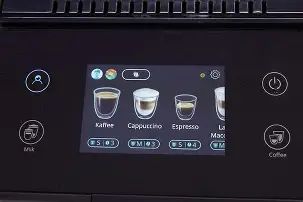
Buyers who care about long-term satisfaction should evaluate the following:
- Cleaning frequency prompts: A machine that clearly asks for what it needs tends to be maintained better.
- Access to parts: Removable brew units and easy-to-clean milk components usually reduce “maintenance dread.”
- Water quality sensitivity: Hard water can accelerate scaling and create performance issues; filtration or descaling schedules matter.
Noise, footprint, and kitchen fit
Grinders are loud. That is a practical truth that becomes important in households with sleeping children, roommates, or early shift schedules. A bean-to-cup machine’s “experience” includes noise profile and how quickly it completes grinding and brewing.
Footprint matters as well: these machines often become countertop anchors. The best fit is a machine that can remain in place without blocking cabinets, crowding prep space, or complicating refills.
Shop the latest Electronics picks on Amazon.
Shop Amazon →Pros & Cons: De’Longhi Rivelia
- Pros
- Convenient bean-to-cup workflow for fast, repeatable espresso-based drinks
- Strong fit for households with mixed drink preferences and limited time
- Encourages consistent daily use by reducing steps and mess
- Can lower café spending for frequent espresso-drink buyers
- Cons
- Ongoing maintenance is non-optional, especially for milk drinks
- Grinder noise can be disruptive in quiet households
- Counter space requirements are meaningful
- Drink quality is typically “consistently good” rather than “tuned-to-perfection” like a dedicated manual setup
Product Review & Analysis: Ninja Frostvault Cooler
What it is (and who it’s for)
The Ninja Frostvault Cooler is designed for people who need dependable cold storage in real life: travel days, beach days, job sites, camping weekends, tournaments, and backyard hosting where the cooler becomes part of the workflow. Buyers typically care about ice retention, internal organization, durability, and how easy it is to access food without dumping out cold air.
Unlike a basic cooler that functions as a single cold bin, a premium cooler is evaluated like gear. It needs to be easy to load, transport, clean, and use repeatedly without small annoyances compounding over time.
Real-world use cases
Tailgates and sports days: A cooler is only “good” if it holds temperature through hours of opening and closing. People care about whether drinks stay cold and whether food remains safe and appealing without getting waterlogged.
Job sites: Durability and day-long cold retention matter, but so does fast access. Workers tend to open a cooler frequently, so design that limits warm air exchange becomes a meaningful advantage.
Road trips and long commutes: The cooler often lives in a vehicle where sun exposure and limited ventilation add thermal stress. People value a cooler that can keep items cold through stops and delays without constant ice replenishment.
Family beach/picnic days: Organization matters. A cooler that keeps sandwiches dry, separates snacks from drinks, and allows quick access can reduce the “cooler chaos” that usually happens after the first hour.
Performance: temperature retention and practical cold management
Buyers should distinguish between “ice retention” as a marketing claim and practic…In everyday ownership, the key performance questions are:
- Does it keep drinks cold enough after multiple openings?
- Does it keep food from becoming soggy?
- Is it still cold late in the day when it actually matters?
Organization and access: why “design” matters more than expected
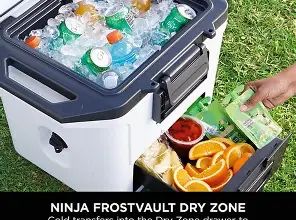
Coolers often fail users not because they can’t hold cold, but because they are inconvenient. If access requires digging, removing items, or leaving the lid open for too long, cold performance drops and frustration rises. Buyers tend to appreciate designs that separate frequently accessed items, support layered packing, and reduce the need to keep the main compartment open while searching.
This is where the Frostvault’s appeal typically lands: not just a colder box, but a cooler that behaves more like a portable food storage system. For families and groups, that organization can feel like a bigger upgrade than raw temperature performance.
Durability, transport, and ergonomics
Premium coolers are heavy, especially when packed. Real-world satisfaction often hinges on handle comfort, balance when carried, and how awkward it is to load into a trunk or lift into a truck bed. If a cooler is excellent thermally but painful to move, it gets used less—or becomes “the cooler someone else carries,” which is not a recipe for universal household approval.
Durability includes not only impact resistance but also hinges, latches, seals, and the way the cooler looks after repeated cleaning. Users typically value a cooler that feels sturdy in the parts that take daily stress, not just in the walls and lid.
Cleaning and hygiene
Food coolers live a hard life: melted ice water, crumbs, sticky spills, and outdoor grit. A practical cooler needs surfaces that rinse easily and corners that don’t trap odors. Buyers who use coolers frequently care about whether it can be cleaned quickly enough that it’s ready for the next outing without becoming a chore.
Pros & Cons: Ninja Frostvault Cooler
- Pros
- Built for repeated real-world use where temperature and access both matter
- Strong fit for outdoor days, job sites, and travel where reliability reduces stress
- Organization-focused design can reduce lid-open time and improve practical cold performance
- Durability-oriented construction suited to frequent transport
- Cons
- Bulk and weight can be inconvenient, especially when fully loaded
- Storage space at home (garage, closet, trunk) can be an issue
- Premium coolers can feel like “overkill” for casual, once-a-year use
- Cleaning is easy only if done promptly; neglect can lead to odors like any cooler
Head-to-Head Comparison (When a Table Actually Helps)
A direct comparison table is only useful if it focuses on decision factors rather than specs that don’t translate to daily life. The table below frames the choice as a lifestyle tool: daily beverage routine versus portable cold storage.
Discover deals on Electronics — updated daily.
View Offers →| Category | De’Longhi Rivelia | Ninja Frostvault Cooler |
|---|---|---|
| Primary purpose | Automated espresso and coffee drinks at home | Long-lasting cold storage for food and beverages on the go |
| Best for | Daily coffee drinkers, WFH routines, households with multiple drink preferences | Outdoor days, travel, job sites, tailgates, tournaments, family picnics |
| What buyers typically care about | Taste consistency, speed, milk-drink convenience, reduced café trips | Ice/cold retention, organization, durability, easy access, leak management |
| Time saved | Saves time daily if replacing café stops or manual brewing steps | Saves time during outings by reducing ice runs and food/drink hassle |
| Maintenance reality | Regular cleaning cycles; milk systems require consistent hygiene | Rinse-and-dry cleaning; odor prevention depends on prompt cleanup |
| Space considerations | Permanent countertop footprint; needs clearance for refills and service | Storage footprint at home; bulky and heavy when packed |
| Ownership payoff | Highest when used nearly every day | Highest when used frequently across seasons or for work |
| Not ideal if… | You rarely drink espresso-based beverages or dislike routine cleaning | You only need a cooler a few times per year and prioritize compactness |
Buying Guide: How to Choose the Right One
Step 1: Identify the recurring pain point
The best purchase is the one that removes a frequent, irritating problem. Buyers should ask:
- Is the daily problem “I need better coffee faster”? That points to the Rivelia.
- Is the recurring problem “Keeping food and drinks cold is a hassle”? That points to the Frostvault.
A premium product that is used weekly (or daily) usually wins over a premium product used a few times a year, even if the rarely used item is objectively impressive.
Step 2: Evaluate “total cost of ownership,” not just price
These products deliver value differently.
Rivelia ownership value: It can replace or reduce café spending, especially for households that buy espresso-based drinks several times per week. It also reduces the “mental tax” of brewing complexity. However, ownership comes with ongoing maintenance, and many owners end up buying better beans once they have a machine capable of showcasing them.
Frostvault ownership value: It reduces spoilage, improves food safety confidence, and makes outings smoother. The payoff is less about saving money in a linear way and more about preventing waste and enabling better experiences—especially when heat and time are real constraints.
Step 3: Be honest about habits and discipline
Both products reward consistent habits.
- If cleaning routines stick: A bean-to-cup machine becomes a daily luxury that feels effortless.
- If cleaning routines slip: Coffee machines become frustrating quickly, especially with milk residue and buildup.
Similarly, a premium cooler is most satisfying when it’s packed thoughtfully (pre-chilled contents, smart organization, and timely cleanup). If the cooler is repeatedly left unwashed in a garage for days, even the best cooler will eventually smell like regret.
Step 4: Match the product to the environment
Kitchen reality for the Rivelia: Buyers should consider water filling, bean access, and whether the machine can live comfortably on the counter without being shoved under cabinets. If it has to be moved in and out for every use, it will be used less.
Storage and vehicle reality for the Frostvault: Buyers should consider where it will live and how it will be transported. If it is too heavy or too large for the vehicle, the purchase may underdeliver emotionally even if performance is excellent.
Step 5: Decide what “premium” means in this purchase
Premium can mean different things:
- Premium as daily ritual: Better coffee at home, fast and consistent, with fewer errands and more comfort.
- Premium as reliable gear: Better trips, safer food, fewer warm drinks, and less logistical friction outdoors or on the job.
Neither interpretation is more valid. The right one is the one that fits how life is actually lived, not how it is imagined during checkout.
Conclusion
The real truth is that the De’Longhi Rivelia and the Ninja Frostvault Cooler are both “quality of life” purchases—but they improve different parts of life. The Rivelia earns its keep through frequency: it’s most compelling when espresso-based drinks are part of a daily rhythm and consistency matters more than becoming a hobbyist barista. The Frostvault earns its keep through reliability under pressure: it shines when heat, time, and repeated access make ordinary coolers annoying or insufficient.
Buyers who want a calmer morning routine, fewer café runs, and a dependable at-home drink experience will usually be happier with the Rivelia. Buyers who spend weekends outdoors, manage long days away from a refrigerator, or simply want food and drinks to stay cold and organized with less fuss will usually be happier with the Frostvault. In both cases, the best choice is the one that will be used often enough to feel inevitable—like it was always supposed to be there.